
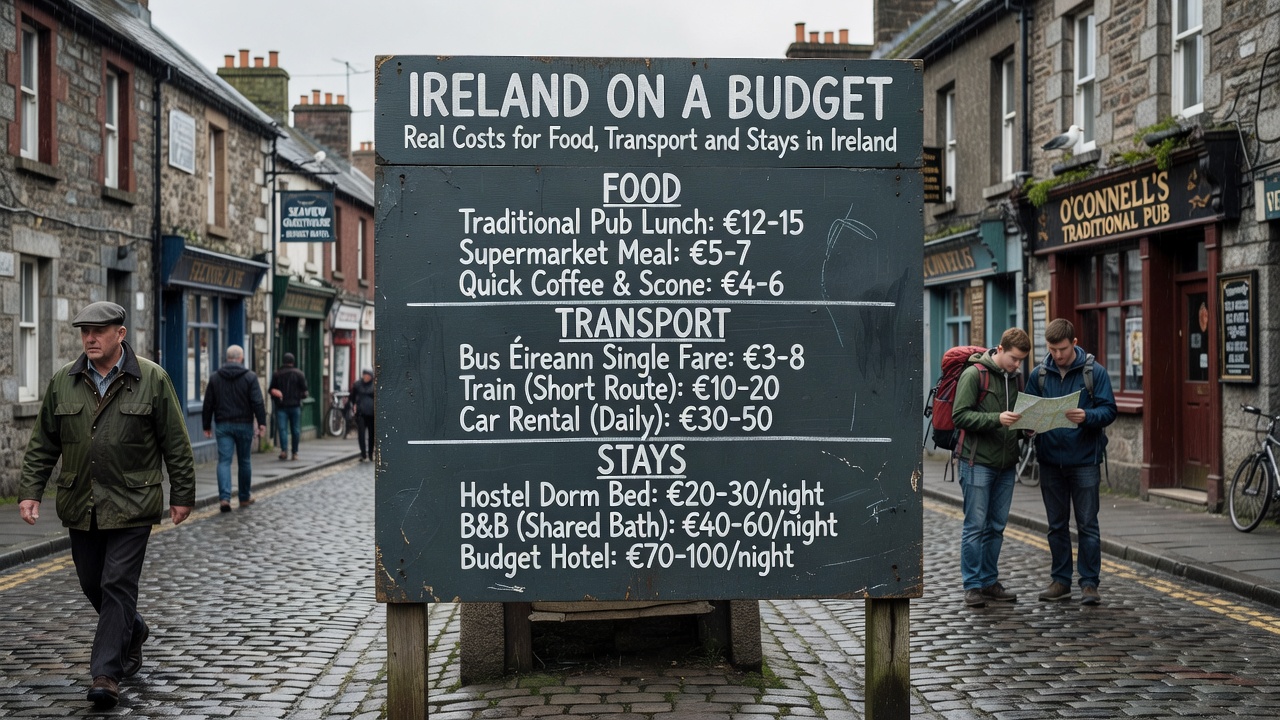
Practical price bands for accommodation, transport and meals across Ireland, with neighbourhood tips for Dublin, Galway and Cork.
Sleeping well without overspending
In Dublin, budget travellers should look beyond Temple Bar. Hostel dorms in the city centre start around €20–€35 per night, but prices rise sharply on weekends and during major events. For private rooms, consider guesthouses in Drumcondra or Ranelagh, where doubles can be found from €70–€90 outside peak season. Galway's Latin Quarter is lively but costly; instead, try the Claddagh or Woodquay areas for quieter stays from €60–€80. Cork's McCurtain Street has a growing cluster of budget-friendly guesthouses, with doubles from €65. Always check if breakfast is included—it can save €8–€12 per person.
Beyond the cities, Bargain stays appear in unexpected places: heritage towns like Trim or Listowel offer B&Bs from €50–€70 per night. Hostels outside Dublin often have private family rooms for €80–€100. If you're flexible, avoid June–August and bank holiday weekends; May and September offer similar weather with lower rates. For the best value, book directly with family-run establishments—many still don't list on major platforms. A reliable rule: €50–€70 per person per night covers a comfortable B&B or guesthouse double in most regions, while €25–€35 secures a hostel dorm.
Getting around: trains, buses and the savings
Ireland's rail network, run by Irish Rail, connects major cities but can be pricey. A Dublin to Galway single booked online in advance costs around €20–€25; walk-up fares are closer to €35. Buses are cheaper: Bus Éireann and private operators like Citylink and GoBus run Dublin–Galway for €15–€20, with journey times of 2.5 to 3 hours. For Dublin Airport to the city centre, the 747 bus costs about €7 single, while the Aircoach is similar; taxis run €25–€35. A Leap Card saves roughly 20% on Dublin's Luas, DART and city buses—a single Luas journey is €2.10 with Leap versus €2.60 cash.
If you're touring the west coast, consider a bus pass: Bus Éireann's Explorer pass offers unlimited travel for €60 over 3 days, which can be good value if you're covering Galway, Limerick and Cork. Trains are more comfortable for longer routes—Cork to Dublin takes 2.5 hours and costs €30–€40 if booked ahead. Car hire is worth it for rural areas like Connemara or the Ring of Kerry, but expect €30–€50 per day for a small car plus fuel at roughly €1.70–€1.90 per litre. Parking in Dublin city centre can cost €3–€4 per hour, so use park-and-ride services like the one at Red Cow for €5 per day.
Eating out without the sticker shock
A full Irish breakfast in a café costs €8–€12, while a pub lunch (soup and sandwich or a carvery) runs €10–€15. For dinner, early-bird menus in Dublin's city centre start at €20–€25 for two courses, but you'll pay €30–€40 in Temple Bar. Galway's Quay Street has many pubs with traditional music and reasonably priced food—fish and chips for €12–€15. Cork's English Market is great for self-catering: a loaf of soda bread is €3–€4, local cheese €5–€7, and fresh produce is affordable. A supermarket meal deal (sandwich, snack and drink) costs €5–€7 and is perfect for a picnic.
If you're self-catering, Lidl and Aldi are your best friends for staples—milk, bread, eggs and pasta cost 30–40% less than in convenience stores. A decent bottle of wine is €8–€12 in off-licences. For coffee, expect €2.50–€3.50 for an Americano; flat whites are €3.50–€4.50 in specialty cafés. Tipping is not mandatory but 10–15% is customary for table service. To keep food costs down, aim for a food budget of €25–€35 per day per person by mixing self-catering with pub meals and avoiding tourist-heavy zones.
When to go and what to skip
May, June and September offer the best balance of weather and value—daytime temperatures hover around 15–18°C, and accommodation rates are lower than in July and August. Avoid St Patrick's Day (17 March) if you're on a tight budget, as Dublin prices double. Also skip the Temple Bar area for food and drink; it's convenient but overpriced. Instead, head to Camden Street or Stoneybatter for better value and local atmosphere. In Galway, the Latin Quarter is charming but crowded—explore the West End for cheaper eats. If you're visiting during winter, many B&Bs offer discounts of 20–30%, but some rural attractions close.
For a budget-friendly trip, base yourself in one city and take day trips rather than moving hotels every night. Dublin has the most frequent transport links, but Galway is a better hub for the west. Cork is ideal for the south. When booking accommodation, look for places with free cancellation and breakfast included. I would book a guesthouse in Dublin's Drumcondra for 2–3 nights, then take a bus to Galway and stay near Eyre Square for access to Connemara tours. Skip the expensive hop-on-hop-off bus in Dublin (€20) and use a Leap Card on regular buses instead—it's cheaper and more authentic.
Frequently asked questions
How much should I budget per day for food in Ireland?
Aim for €25–€35 per person per day by mixing supermarket meals with pub lunches and occasional early-bird dinners. Breakfast at your accommodation and a picnic lunch can keep costs near €20, leaving room for a decent dinner.
What's the cheapest way to travel between Dublin and Galway?
Buses are cheapest: Citylink and GoBus offer fares from €15–€20 online, with journey times of 2.5–3 hours. Trains are faster but cost €20–€35 if booked in advance.
Where can I find budget accommodation in Dublin?
Look beyond Temple Bar: hostels in the city centre start at €20–€35 for dorms, while guesthouses in Drumcondra or Ranelagh offer doubles from €70–€90. Book directly for better rates and check for breakfast inclusion.
Read the guide